
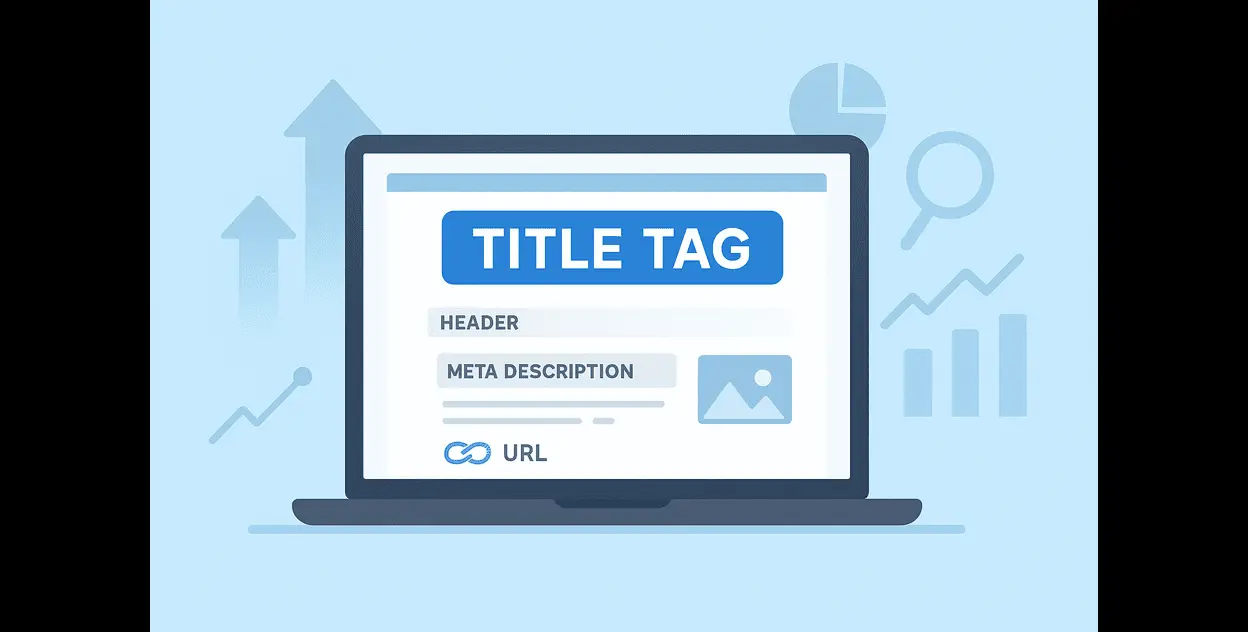
As an experienced SEO expert over 6 years. I understand how many on page SEO elements impact rankings. The most asked question is Which on page Element carries the most weight for SEO?
Each element affects the ranking. Some identify the subject of the web page for the engines. Others enhance user experience. According to backlinko and research, The On page element which carries the most weight for SEO is Title Tag .
Other elements like the meta description, header tags, and internal links help search engines to understand your content better. Every single on-page SEO factor has its own function. Some assist the search engines in comprehending your content. Other factors have an impact on the visibility of your page in the SERPs. A small number of them are dedicated to making the user experience better on your website.
This post identifies the most impactful on-page SEO element for search engine rankings. It also explains how other parts of your page work together. These elements collaborate to improve your page’s visibility. For more SEO related Blogs or guides visit Aim IT Solution Blog Section.
Table of Contents
Understanding Which On Page Element Carries the Most Weight for SEO
There are many on-page SEO elements on every page, but their weight is not the same for all. From my experience of working with different industries, the title tag still has a major impact, and Google considers it as a signal to discover page content, especially the topic of the page.
The title tag reveals the page’s main point. It is displayed as the blue clickable link in SERP. Google uses the title tag to understand the content of your page and its relevance to a search term.
For instance, a title like, “Best Coffee Shops in New York” indicates to Google that the page focuses on coffee shops in New York City.
A proper title is also helpful to the users. It gives a preview of what is to come before they click. When more users click and then remain on your page, it gets more trustworthy, and that is the reason why Google assigns higher trustworthiness to pages with great and relevant titles. Google’s SEO rules and Backlinko’s research have confirmed that the title tag is still one of the most significant on-page ranking factors.
Key On-Page Elements That Influence Rankings
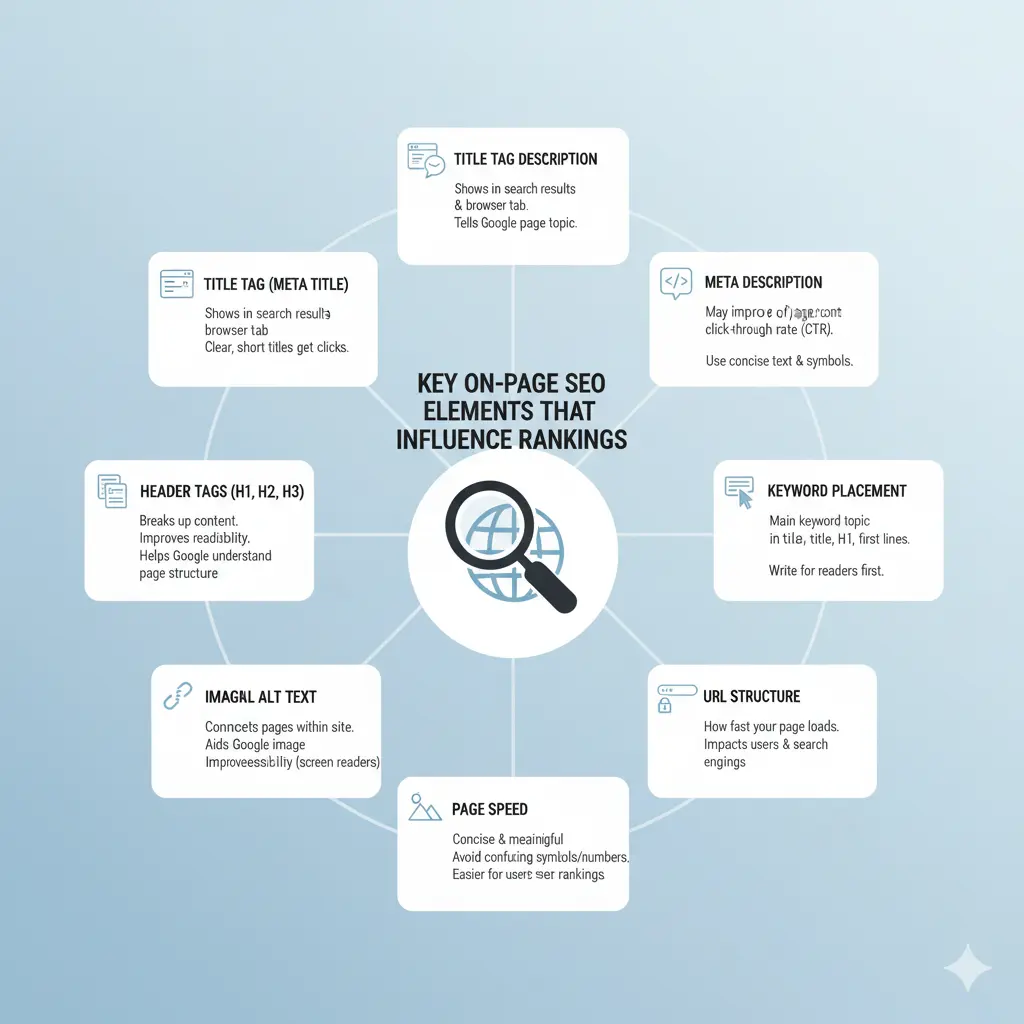
Google looks at many parts of a page to understand its content. Each element plays a role in helping your page perform better in search and improving the user experience.
Title Tag (Meta Title)
The title tag, also called the meta title, shows your page title in search results and the browser tab. It tells Google your page topic. A clear, short title helps users understand your page. It can make people click on your link. Studies by Backlinko and Google show that a well-written title tag can improve rankings and clicks.
Meta Description
A meta description offers a summary of your page content. It may not affect ranking but may affect whether users click your page or not. Using a concise and clear description informs a reader of what to expect in the article. Well-written summaries that incorporate symbols or images (like ratings) improve click-through rate.
Header Tags (H1, H2, H3)
Headers help break up the content and make it easier to read through. Headers also help Google understand the structure of your page.
Keyword Placement
Keywords indicate what your page talks about. Place your main keyword in the title tag, one header, and the first few lines. Add related words naturally. Avoid overusing keywords. Write for readers first, not just search engines.
Image Alt Text
Alt text describes what an image shows. It helps Google understand images and improves accessibility for people using screen readers. Optimized alt text can also increase the chance of your images appearing in search results.
Internal Links
Internal links connect pages within your site. They help Google crawl your site and understand how pages relate. They also guide readers to related content and keep them engaged longer.
URL Structure
Keep Website URL concise, straightforward, and meaningful. Use terms that clearly portray the topic of the page. Avoid confusing symbols or numbers. Clean addresses are easier for people to read and for search engines to crawl.
Content Relevance & User Intent
Google wants to show pages that answer people’s questions. Your content must match what users search for. If users do not find what they need, they leave quickly. This may indicate that the page is not helpful.
Use keywords naturally. Focus on your main topic and related ideas. Do not add unrelated content just to include keywords.
Break your content into small sections. Use headers that describe each part clearly. This helps readers scan your page and understand it faster. Add examples and simple explanations. They make your content easier to read and trust.
Pages that match user intent and provide value are more likely to rank well. Write for humans first and search engines second. Content that satisfies users keeps them on your page longer.
Tip: Google advises creating content that matches user intent. From my experience, pages that focus on intent perform better than those that do not.
Effective On-Page Optimization Techniques For 2025
SEO continues to evolve each year, yet some fundamental principles remain constant.
Have short descriptive titles. The title tag conveys your page’s content. A concise, easy-to-read title aids both Google and users.
Provide valuable content. Your content should answer all questions your readers ask. Refrain from adding unnecessary filler.
Use a hierarchy of headers. Split content into sections of H2 and H3. Scannable pages, and quick info retrieval and content organization make your pages more user-friendly.
Introduce keywords seamlessly. Place your main keyword in the title, in one header, and the opening of the body. Use related and relevant words. Keyword stuffing creates a poor experience.
Optimize your images. Describe the image and incorporate relevant alt text. Also, ensure images load in a reasonable time.
Use internal links. Linking to related pages and content helps guide readers and improves site navigation.
Simplify your URLs. Short, concise, and descriptive URLs work best. Steer clear of random symbols or numbers.
Ensure your site is mobile optimized. Most users access your site from their smartphones. Google primarily uses the mobile view to index your pages.
Enhance your page speed. Pages that load quickly are more enjoyable. Unload unnecessary code and compress images to improve this.
Using these techniques simultaneously enhances the readability of your page. This allows both users and Google to comprehend your content more effectively.
How On Page SEO Affects Website Performance
On page SEO helps people use your website more easily.
Titles and headers show what each section is about. They make the content easier to read.
Good content keeps visitors on your page. When users stay and interact, it may show that the content is useful.
Internal links guide people to other pages. They help readers find more information and make navigation smoother.
Keywords placed naturally help Google show your page for relevant searches.
Optimized images improve page speed. Alt text helps Google understand images and makes the site accessible for everyone.
Clean URLs and short paragraphs make the website simple to navigate.
When all these elements work together, your website becomes easier to use. It increases the chances of ranking well and engaging visitors.
Conclusion
In this blog you explore various on page seo elements and get to know which On-Page Element Carries the Most Weight for SEO. On-page SEO improves your website traffic and helps visitors find content easily.
Focus on titles, meta descriptions, and headers first. These elements guide both users and search engines.
Also use internal links, URLs, image optimization, mobile-friendliness, and page speed. Each element helps users interact and helps search engines understand your content.
Google favors content that covers a topic fully. Pages with related ideas, facts, and subtopics rank better.
Make your website mobile-friendly. Most visitors use smartphones, and Google mainly indexes the mobile version.
Follow these strategies to create a website that ranks well and gives a good experience to visitors.
FAQs – Which On Page Element Carries the Most Weight for SEO
Which On Page Element Carries the Most Weight for SEO
According to backlinko and SEO Expert, Title carries the most weight for SEO