
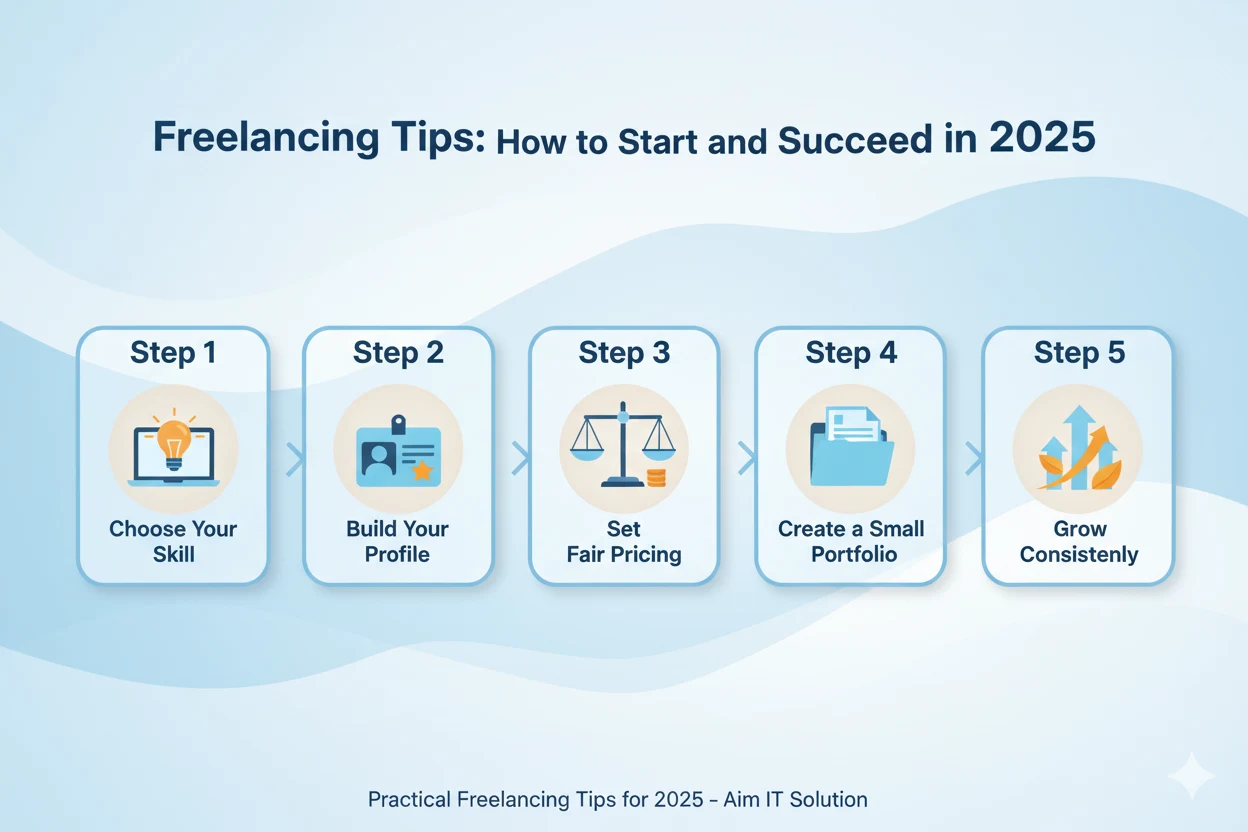
Freelancing Tips: How to Start and Succeed in 2025
If you’re new to freelancing, it helps to follow a few clear steps. With the right freelancing tips, you can avoid early mistakes and start strong. These tips will show you how to begin, choose a skill that fits you, and grow over time.
Freelancing gives you the freedom to work your way. You can choose projects that match your skills and work from anywhere. But building a steady freelancing career takes time and effort. Focus on finding reliable clients, doing good work, and learning new things to grow.
In this guide, you’ll find simple freelancing tips that help you get started. You’ll learn how to get your first client, Beginner’s guide to freelancing, manage your work, and stay consistent. These steps will help you build a solid freelance career in 2025. If you want to learn more digital marketing tips so you can follow Aim IT Solution’s blog.
Building a Strong Portfolio with Freelance Tips
A good portfolio helps clients see what you can do. It’s your work proof. These freelancing tips can help you create a professional portfolio, even if you’re just starting.
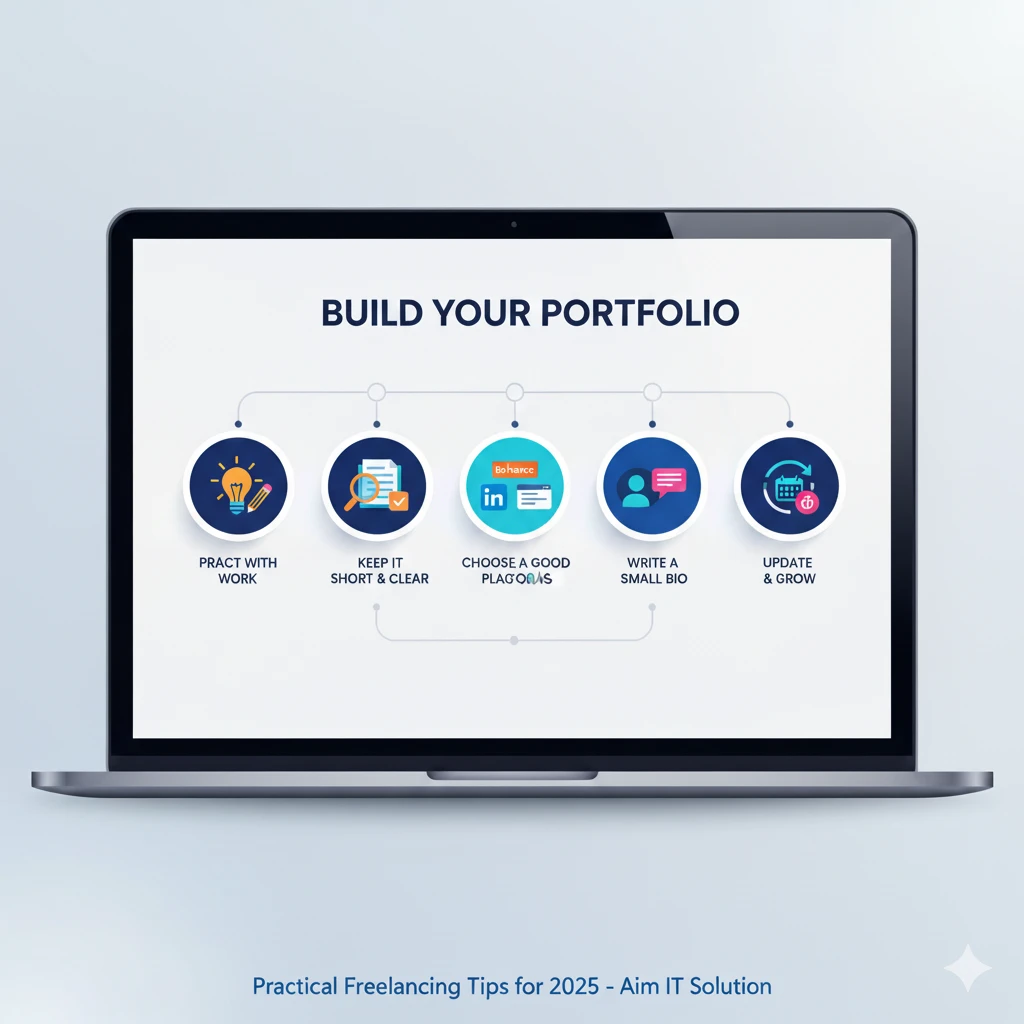
1. Start with Practice Work
If you don’t have client projects yet, create your own samples.
For example:
- Write a few blog posts if you’re a writer.
- Design a few logos if you’re a designer.
- Build a small website if you’re a developer.
These practice works show your skills and help clients understand your style.
2. Keep It Short and Clear
- Add only your best 3–5 works.
- Write a small note under each one — what you did and what tools you used.
- Keep your layout simple so everything is easy to read.
3. Choose a Good Place to Show It
- You can upload your work on LinkedIn, Behance, or Dribbble.
- If you have your own website, create a small “My Work” page.
- Make sure all links work and the page opens fast on phones.
4. Write a Small Bio
- Add a few lines about yourself.
- Say what you do and what kind of work you take.
- Include your email or contact info so clients can reach you easily.
5. Keep It Updated
- Whenever you finish a new project, add it to your portfolio.
- Remove old or weak samples that no longer show your best work.
- A fresh portfolio helps clients see that you are active and reliable.
One of the most useful freelancing tips for 2025 is to build a strong portfolio that clearly shows your best work.
Managing Freelance Projects Efficiently
Good project handling makes freelancing easier with the help of freelancing tips. It helps you finish work on time and keep clients happy.
1. Plan Before You Begin
- Read the project details properly before you say yes.
- Know what the client needs, when they want it, and how much they will pay.
- If anything is unclear, ask questions first. Clear talks save time later.
2. Use Basic Tools
You don’t need heavy software.
Simple tools work best:
- Google Calendar for tracking dates
- Trello or Notion for task lists
- Google Drive for storing files
These help you stay organized and find your work easily.
3. Set Small Deadlines
Break your work into small steps — like research, draft, and final work.
Give each step its own short deadline.
It keeps you focused and stops last-minute rush.
4. Talk with Your Client
- Share short updates while working.
- Tell them what you’ve finished or if you need more details.
- Regular talks build trust and reduce rework later.
5. Check Before You Send
Before you submit, go through your work once.
Fix small mistakes and make sure everything matches what was asked.
Neat, complete work gives clients a reason to come back.
Freelance Contracts, Payments, and Taxes
When you start freelancing, money and trust matter most. Handling both the right way protects your time and work.
1. Use a Contract
Always make a written agreement before starting a project.
It should mention:
- The type of work you’ll do
- The deadline
- How and when you’ll get paid
A short email confirmation works too. It clears doubts and avoids confusion later.
2. Take an Advance
Ask for 30–50% payment upfront before you begin. It shows the client is serious and helps you stay secure. Once you build a good relationship, you can adjust this.
3. Choose Safe Payment Options
Use trusted platforms like PayPal, Wise, or Upwork for payments. Avoid direct bank transfers from people you don’t know. It keeps your money safe if any issue comes up.
4. Keep Project Records
Save your invoices, messages, and emails. They help if a client delays payment or if you need to check past work. It also makes your work look organized and professional.
5. Manage Taxes Early
If freelancing becomes a steady source of income, learn the basic tax rules. Keep a note of your income and expenses every month. It makes tax filing simple and avoids trouble later.
Building Long-Term Client Relationships
Freelancing tips isn’t just about finding new clients every month. The real growth comes when old clients keep coming back. That’s how you build stability and trust in your work.
1. Talk Clearly
When you take a project, discuss everything in simple words — what you’ll do, how long it’ll take, and what you’ll charge. If anything changes later, update your client quickly. This avoids confusion and keeps things smooth.
2. Finish Work on Time
Nothing builds trust faster than delivering on time. If a delay happens, tell your client before the deadline, not after. Most people understand honest communication.
3. Do Your Work Properly
Focus on doing clean, reliable work. Clients remember those who make their job easy. You don’t have to add extra things — just make sure what you deliver is solid and matches what was promised.
4. Ask How You Did
After finishing the project, ask your client if everything went well. If they share feedback, take it seriously — it helps you get better. You can also keep their kind words as a short testimonial for your portfolio.
5. Keep in Touch
After a few weeks, send a short message to check how the project is going. It doesn’t have to be about getting more work — just a simple follow-up shows you care. Most repeat projects come from small, genuine connections like this.
Managing Time and Avoiding Burnout
Working as a freelancer means you control your time, but it also means you handle everything alone. Without planning, it’s easy to feel tired or lose focus. Managing time well keeps your work and mind steady.
1. Plan Simple
Start your day by writing down what you’ll do. Keep the list short and real — not ten things you can’t finish. Focus on what needs to be done first and move step by step.
2. Take Short Breaks
Don’t sit in front of the screen for hours. Stand up, walk around, or just rest your eyes for a few minutes. It helps you think clearly and keeps your body active.
3. Avoid Overbooking
It’s common to take too much work at once, especially when clients come easily. But that only leads to stress and late deliveries. Take what you can finish well — quality brings more clients than quantity.
4. Set Work Hours
Decide when your workday starts and ends. After that, close your laptop and do something else. It helps you recharge and keeps freelancing from taking over your whole day.
5. Take Care of Yourself
Eat on time, sleep enough, and move a little every day. A tired mind can’t focus, no matter how much coffee you drink. Good health keeps your work smooth and consistent.
Tools That Make Freelancing Easier
Freelancers work alone, so tools help keep things simple. They save time, help you stay organized, and make work look more professional.
1. Managing Work
Use tools like Trello or Notion to track projects. They let you list tasks, set deadlines, and check progress easily. A simple board or list is enough to stay organized.
2. Talking to Clients
Keep client chats in one place. Use Zoom, Google Meet, or even WhatsApp if the client prefers. Clear talks prevent confusion and help you work smoothly.
3. Getting Paid
Use trusted platforms like PayPal, Wise, or Payoneer. They’re safe for both sides and work in most countries. For invoices, Wave or Invoice Generator make billing simple and neat.
4. Sharing Files
Use Google Drive or Dropbox for sending work files. Keep folders labeled by project name and date. It helps you find things easily later.
5. Tracking Time
If you’re paid by the hour, use Clockify or Toggl. They record how long each task takes, so you bill correctly and manage time better.
6. Learning New Skills
Freelancing needs regular learning. Websites like YouTube, Coursera, or Skillshare offer good courses. Pick one platform and spend a little time each week learning something new.
Final Thoughts on Freelancing Tips
Freelancing takes time to understand. These freelancing tips help you in your way. At first, it feels slow, but every small job helps you get better. Start with what you know and keep improving. You don’t need everything planned out — just start and stay consistent and follow freelancing resources. Clients look for people who deliver what they promise.
If you finish work on time, stay clear in communication, and keep learning, you’ll build trust and steady work will follow.
Freelancing isn’t luck. It’s patience, effort, and showing up every day.





Good stuff.