
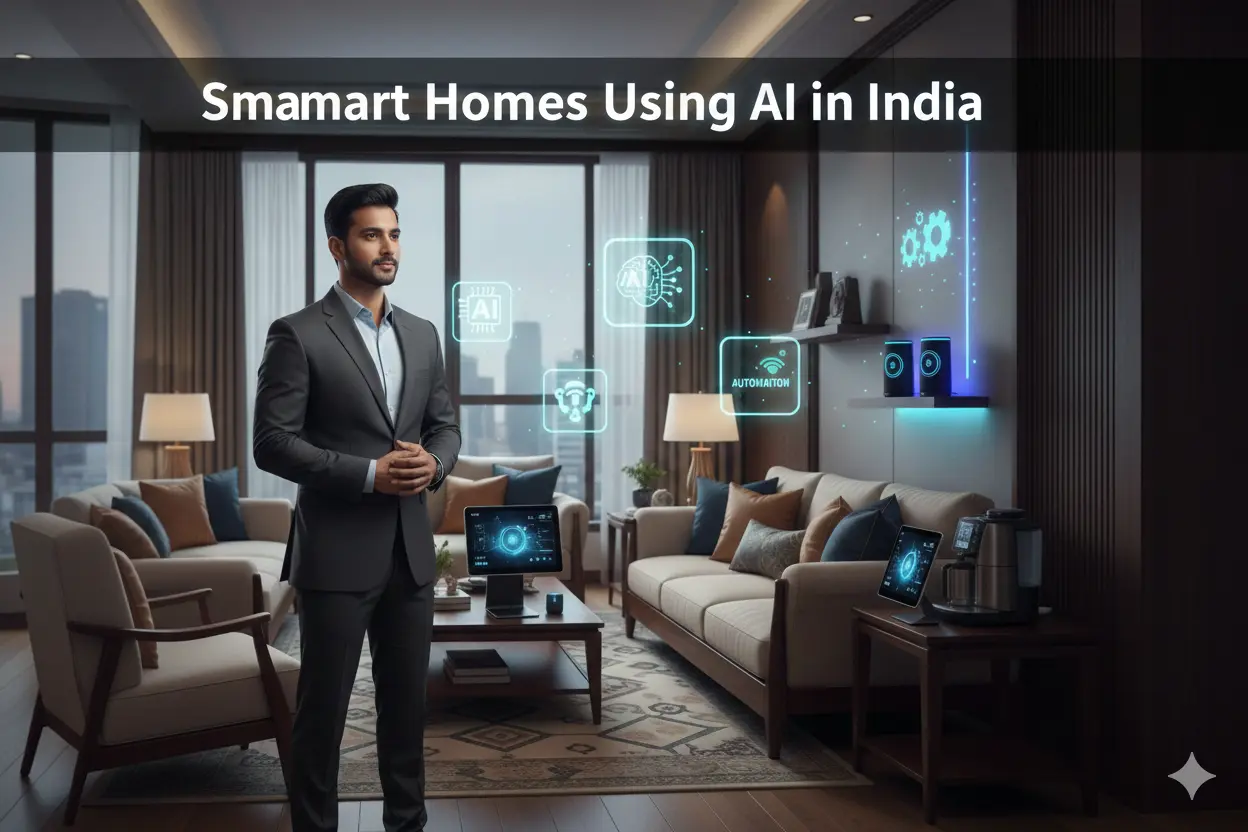
Smart homes using AI in India opening up new possibilities is no longer a future concept. Indian households now use AI tools that make daily living simple, safe, and energy-efficient. Affordable devices and better internet help more families adopt smart features at home. Awareness is rising, and people see real value in these upgrades. Tech companies like Aim IT Solution also encourage this shift by spreading knowledge about smart automation. This change shows how technology shapes daily life in cities and towns across India.
Why Smart Homes Are Growing in India
The Indian smart home market grows each year. Families want better comfort and safety, so they show more interest in AI-based home automation. Wider broadband access has also helped.
Smart devices now cost less than before. Basic automation like smart bulbs and plugs is affordable for many homes. This makes adoption easier across middle-income households.
More people now explore voice control, smart lighting, and energy tools as practical upgrades rather than luxury add-ons.
AI Technologies Behind Smart Homes
1. Voice Assistants and NLP
Voice assistants allow users to control appliances with simple commands. Many tools now support Indian languages. This improves usability for Indian families.
2. Machine Learning for Energy Use
AI learns user habits. It adjusts lighting and cooling based on patterns. This reduces electricity waste and lowers bills.
3. AI Security and Computer Vision
AI cameras detect motion, faces, and threats. Smart locks and alerts give strong security compared to standard locks.
4. IoT Sensors
Sensors track air quality, temperature, and movement. AI uses data to automate tasks like switching off devices or adjusting lighting.
5. Predictive Maintenance
Smart appliances monitor performance and alert users early. This prevents breakdowns and improves appliance life.
Benefits for Indian Households
Better Security
AI cameras, sensors, and locks protect homes. Alerts notify families instantly about unusual activity. It also helps elderly members with fall detection and safety automation.
Energy Savings
AI systems adjust power use. They control fans, ACs, and lighting based on need.
Studies show energy use can drop by 15% to 25% with AI-based automation.
Convenience at Home
Smart homes reduce manual work. Users can automate schedules, control appliances remotely, and set routines with ease.
AI learns preferences and adjusts temperature, lighting, or music for each person.
Health and Comfort
AI systems monitor indoor air quality. Devices activate automatically if pollution levels rise.
For seniors or people with mobility challenges, AI helps with voice-controlled lights, doors, and appliances.
Challenges in India
Internet and Power Issues
Some areas still have unstable internet or power. Smart homes need stable connectivity.
High Setup Cost
Basic devices are cheap, but full home automation can be costly.
Privacy Concerns
Smart devices collect behaviour data. This raises privacy and safety concerns.
Device Compatibility
Different brands use different systems. Some devices may not work together smoothly.
Future of Smart Homes in India
The next few years will bring strong growth in AI-enabled homes. Internet access is expanding fast. Device costs are falling. More families beyond metro cities will start using AI automation.
Government programs and tech partnerships will also push adoption across housing societies.
We will see better integration between appliances, sensors, energy systems, and health tools. Homes will adjust to weather, routine, and energy prices on their own. AI-powered homes will soon offer practical support for seniors, working couples, and families with children.
Final Thoughts
Smart homes using AI in India opening up new possibilities are already visible today. AI helps Indian families improve safety, comfort, and energy use. With stronger infrastructure and lower costs, adoption will rise across all income groups.
The challenges are real — privacy, cost, and power issues. With the right systems, AI helps people manage daily life at home in a better way. Smart homes go beyond automation. They offer smarter, safer, and more comfortable living for every household.