
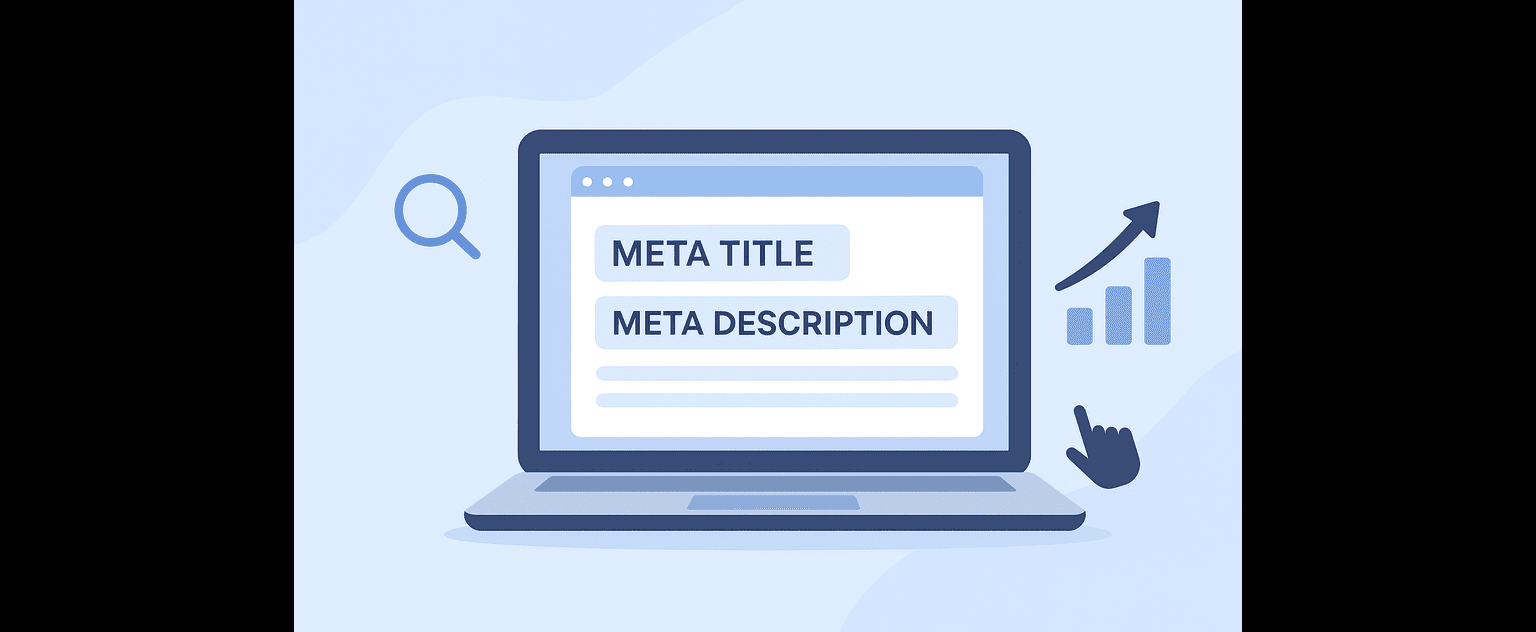
When optimising a website for search, meta and title tags have ranking impact on the search engine. Title tags signal search engines what your web page is about. Meta descriptions is for users why they should click on your page.
Well constructed meta and title tags have the potential to improve the page rank, while clear and concise meta descriptions can improve the number of visitors to your page.
Missing or poorly constructed tags can lead to a drop in page rank and the page will be ignored by the searchers, as the page might not be relevant to the search.
In this guide, we will discuss:
- What title and meta tags are
- The impact of these tags on your SEO
- Ways to write them
- The mistakes people commonly make
Following these practices will optimise your SEO and increase the number of visitors on your website. This is something we do on a daily basis for our clients at Aim IT Solution. For example, after improving meta and title tags for a local business, we saw a 20% increase in organic clicks within two weeks.
Table of Contents
What Are Meta Tags and Title Tags?
Title tags and meta tags are small pieces of code on your web page. A title tag is displayed at the top of the web browser as well as in the search results. It informs both the search engines and the visitors regarding the content of your page.
Meta tags include meta descriptions, meta keywords, and other HTML elements. Among these, the meta description is most important for users. It summarizes the page content and encourages clicks.
At Aim IT Solution, we focus on SEO meta tag optimization to improve rankings. Well-written title tags and meta descriptions help search engines understand your page. They also make your page more attractive in search results.
Using meta and title tags importance correctly ensures that your pages get indexed by search engines. Pages without proper meta tags may rank lower or be ignored in search results.
How Meta Tags Affect Search Engine Rankings
Meta tags show search engines your page. Good tags help your page appear in search results. Pages with good meta tags are easier to index.
Title tags are very important. Search engines read meta tags to understand your page. If the tags are clear, your page shows up for the right searches.
Meta descriptions do not directly change rankings. But they affect SERP click-through rate (CTR). A clear meta description makes users want to click. More clicks can lead to higher traffic and better engagement.
Using meta tags correctly helps search engines crawl your pages. Pages with missing or poor tags may rank lower even if the content is good.
In short, Title tags help search engines understand your page. Meta descriptions attract clicks and bring more visitors.
Optimizing Title Tags for SEO
Title tags show what your page is about. A clear title helps your page rank and get more visitors.
Keep your title tags short and clear. Around 50–60 characters is ideal. Include your main keyword near the start. This improves relevance for search engines.
Make each title unique. Avoid using the same title for multiple pages. Title tag SEO best practices also include making the title readable for users. A good title should explain what the page offers.
Do not stuff keywords. Write naturally. A clear, simple title gets more clicks and keeps users engaged.
Use brand or location only when needed. For example, “SEO Meta Tags Best Practices – 2025 Guide” is better than just “SEO Guide.”
Well-optimized title tags can increase title tags and organic traffic. They help your page appear in the right search results and improve user engagement.
The Role of Meta Descriptions in CTR
Meta descriptions summarize your page for users. They do not directly change rankings. But they influence meta description and CTR.
A clear meta description tells users what your page offers. It encourages them to click. More clicks can increase traffic and user engagement.
Keep meta descriptions under 160 characters. Include your main keyword naturally. Make it easy to read and relevant to the content.
Avoid copying content from the page. Write a meta description for each page. It tells users what the page is about. It also helps search engines understand the page.
A good meta description attracts clicks. It brings more visitors to your page. It makes your page stand out in search results.
Common Mistakes to Avoid in Meta and Title Tags
Many people make mistakes with meta tag and title tags. These mistakes can lower SEO and reduce clicks.
1. Missing Title or Meta Tags
Some pages do not have a title or meta description. Search engines may not read the page. Users may skip the page in search results.
2. Duplicate Tags
Some pages use the same title or meta description. Search engines get confused. Each page should have its own unique title tag and meta tag.
3. Keyword Stuffing
Some pages use too many keywords. This looks unnatural. It can reduce clicks and hurt SEO. Write naturally and focus on clarity.
4. Too Long or Too Short Tags
Some titles are too long. They get cut in search results. Some meta descriptions are either too long or too short. Write them in a clear and simple way.
5. Irrelevant Tags
Some titles or meta descriptions do not match the page content. Users may leave the page quickly. This can hurt rankings.
Avoid these mistakes to improve meta and title tags importance. Good tags help search engines read your pages. They also attract the right visitors.
Conclusion
Meta and title tags play a big role in SEO. They help search engines understand your page. They also help users decide whether to click your link.
Write clear and relevant tags. Use your main keyword in a natural way. Avoid long or confusing sentences.
Small changes in your tags can bring more visitors. Focus on what your audience wants to see. Good tags make your website stand out and get more clicks.
👉 Check out the On Page SEO Services available at Aim IT Solution. We optimize your website for better rankings and conversions.
FAQs
Q1. Do meta descriptions affect SEO rankings?
Meta descriptions don’t directly affect rankings, but they help in increasing click-through rate, which can indirectly boost performance.